
Introduction to Ham Radio

For those of you who do not know, Ham Radio is the coolest thing ever.
Backstory
I first heard about Ham Radio from my Uncle Eric. I think. At some point way back when, I heard about how he (Eric) was part of TERT (Timpanogos Emergency Response Team). As part of that (to my memory) he would occasionally man base camp, a campsite halfway up Mt. Timpanogos in order to facilitate communications with emergency rescuers and injured hikers. As there is not much in the way of reliable cell service, the base camp used big fancy radios that were so powerful that you needed to be certified to communicate. Or at least that is how I remember the story.
Uncle Eric
Interestingly, my Uncle Eric has inspired quite a few of my hobby interests. He is an awesome person who has been involved in a lot of incredible outdoor activities. He is also one of the nicest guys of all time.
Introduction
According to Wikipedia:
Amateur radio, also known as ham radio, is the use of the radio spectrum for non-commercial communication, technical experimentation, self-training, recreation, radiosport, contesting, and emergency communications.[1] In 1927 a radio amateur was defined as "a duly authorized person interested in radioelectric practice with a purely personal aim and without pecuniary interest," meaning without monetary or similar reward. The definition distinguished amateur activity from commercial broadcasting, public safety services, and professional two-way radio uses such as maritime, aviation, and taxi communication.[2]
You might be asking, "Why should I be interested in Ham radio?" Let me tell you.
Emergency preparedness
For starters, Ham radio has some seriously awesome emergency preparedness benefits. The radios operate independent of cell towers or satellites, so in the event of an emergency, as long as your batteries are charged, you can still communicate with friends and family. The radios are powerful enough to communicate all the way around the world!
Friends and Family
One thing to note here. You can use Ham Radio to communicate with friends and family. But they will need to be convinced into getting a certification in order to actually communicate with them. This mostly involves telling them repeatedly about how awesome Ham radio is until they finally cave and agree to get certified.
More on the test specifics below.
In many areas, clubs and other organizations work closely with police, fire, and emergency services to provide communication services during disasters. F.Ex. hurricane Katrina knocked out power and cell towers, and ham radio was used by people in the area to coordinate rescue efforts. (See article here)
General fun
Outside of the emergency benefits, there are a lot of activities you can use the radios for. These are a great way to become familiar with how the radios work, and learn more about the technology.
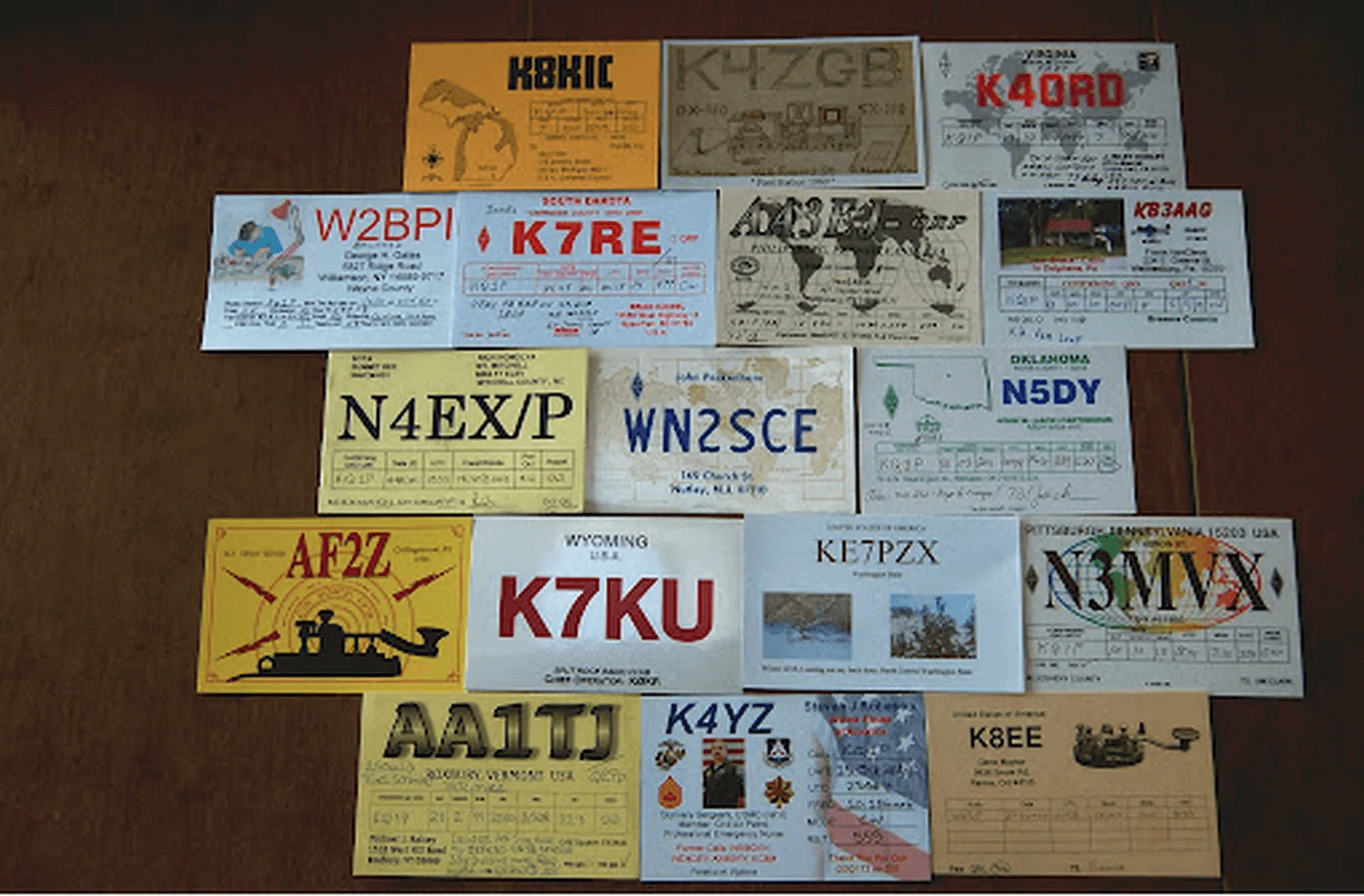
Many hams (ham radio operator) collect a log book of contacts in the same way others would collect stamps. Each ham creates a unique card (called a QSL card) with information about their radio station and license, and you exchange them when you make contact. Extra points for longer distances, unique designs, or unique contact methods.
Once you are certified, you can also learn quite a bit about how the technology works by building your own radios and antenna. I am excited to get into this eventually, but for now I am starting with the basics.
Radios are also used in massive games of hide and seek (called fox hunts), as well as competitions to see who can make contact with the farthest away radio. There is even a very active program known as POTA (parks on the air) where you can collect contacts from inside the national parks.
According to wikipedia:
Parks on the Air (POTA) is an international radiosport award program that encourages licensed amateur radio operators to visit, enjoy and operate portable equipment in a variety of parks and public lands, always respecting other park users and local regulations. POTA issues awards to participants based on a wide range of criteria including the total number of radio contacts made, number made on each amateur radio band, and for different modes of communication including voice, Morse code or FT8.
Ham radio is also a great way to learn morse code. You may ask, "Why in the world would I want to learn morse code???" If you are asking that, I suspect that your life is dull and small, as learning new and interesting things is the spice of life. I suspect that with the notable exception of my mom and grandma, if you have made it this far into my article, you probably are at least a little interested in expanding your horizons.
So as you can see, Ham Radio is an AWESOME hobby.
Certification
There are three levels of ham radio license available in the US:
- Technician
- General
- Amateur Extra
Each level is progressively more comprehensive, and obtaining each license allows for progressively more options. A general license allows you to use more frequencies, equipment, etc... than a technician license would allow.
The tests themselves are generally intended to make sure you know enough to stay out of trouble. The radio technology is used by commercial businesses, as well as the military, so they would like you to know what you should and should not be doing with your radio. The test also covers basic electrical components, and radio technology info.
Each test draws questions from publicly available test banks. F.Ex. the technician test has ~400 multiple-choice questions in the bank. The test consists of a random choice of 35 of those ~400, and in order to pass you have to get at least 26 questions correct.
As each test publishes all of the questions in advance, studying is pretty easy. All you have to do is learn the answers to all of the questions (Or at least enough of them to pass). It took me about 6 hours of study to pass the technician test.
I am currently studying to be able to pass the General test. Hopefully will be able to pass sometime this month!
Equipment
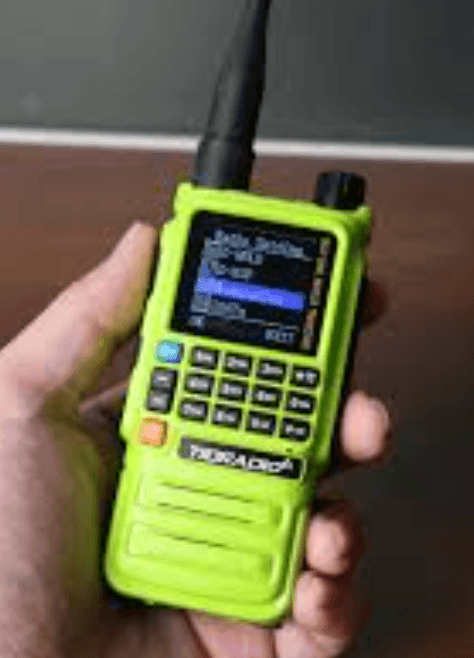
As of right now, the only radio I have is a Tidradio h3 plus. It is known as an HT (handheld transceiver) which is basically a fancy word for a slightly beefed up walkie talkie. Without going into too much detail, I can use this radio to talk to someone all the way in California!